What a 6-Year-Old Can Learn From Starting a Business
Six-year-olds can't read a P&L, but they can learn courage, kindness, and the kind of math that actually sticks.
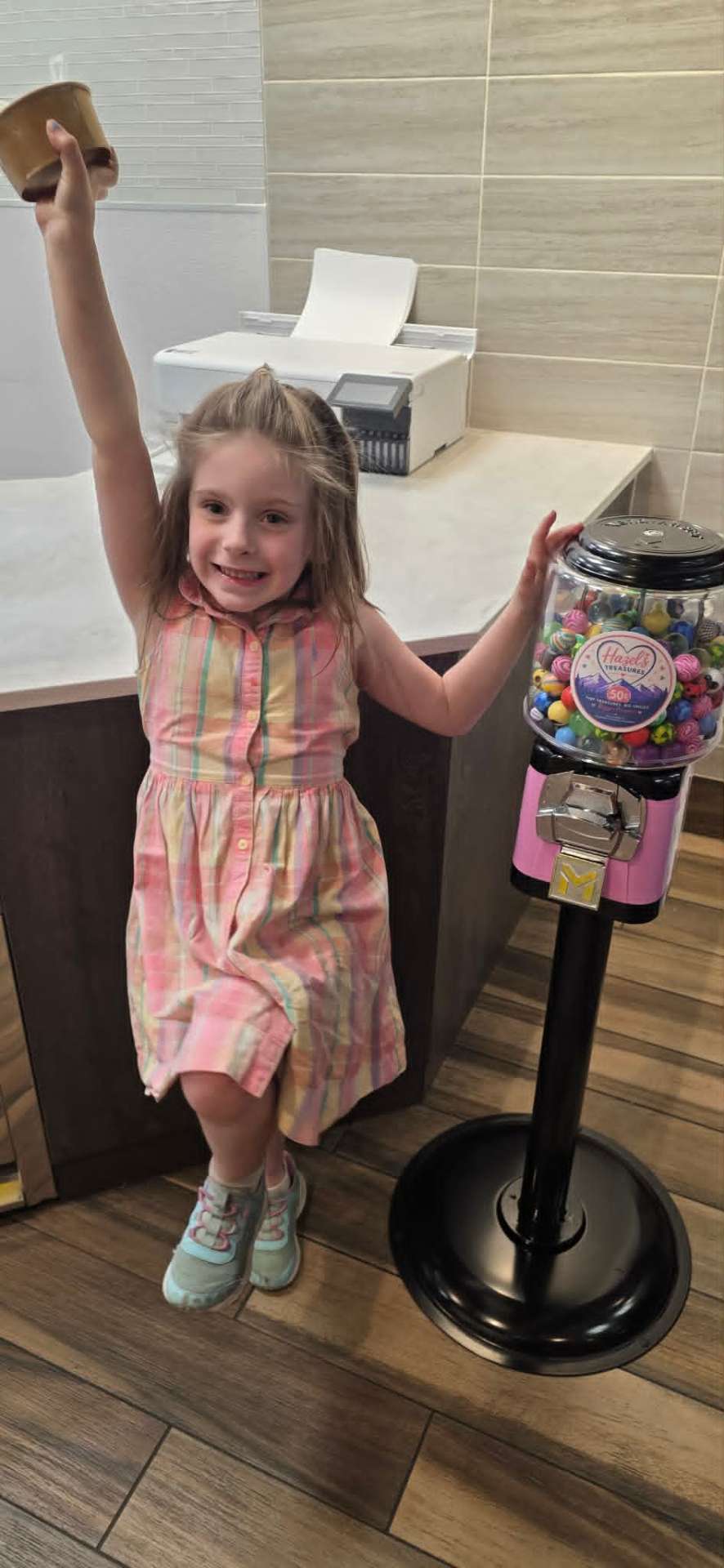
People ask us, very politely, what a six-year-old could possibly learn from starting a business. We're only at the very beginning of finding out — Hazel's first machine just went in this week — but the early lessons have already surprised us.
Here's what she's beginning to pick up. Not proven outcomes — early observations from a family figuring this out together, in real time.
1. Money is something you make, not just something you ask for
The first time Hazel emptied her vending machine and counted the quarters on the kitchen floor, something in her face changed. She had earned that. Not as an allowance. Not as a gift. She had stood in front of strangers, asked for permission, refilled a machine, and now there were quarters in her hands because of choices she had made.
That shift — from "money is given" to "money is earned" — is the foundation of everything else.
2. Brave isn't the absence of nervous
Hazel still gets nervous before she walks into a new business. Her hands fidget. She practices her introduction in the parking lot. And then she does it anyway.
If we'd told her "don't be nervous," she would have learned that nervous was bad. Instead she's learning that nervous and brave can live in the same body at the same time. That's a lesson most adults are still working on.
3. "No" is not the end of the story
Not every business says yes. Some say not right now. Some say maybe later.
Even in this first week, that first quiet "no" felt like a stomachache for her. We're hopeful that, over time, she'll start to hear "no" as information instead of identity. We're not there yet — but we're walking toward it together.
4. People remember how you make them feel
Hazel has discovered, mostly on her own, that smiling at the person behind the counter is not optional. That writing a thank-you card after a business says yes is not optional. That waving at the kids who pick a bouncy ball is not optional.
None of this is in a curriculum. All of it is in her bones now.
5. Generosity feels better when it costs you something
Ten percent of every purchase is independently donated to Children's Hospital Colorado. That's ten percent that doesn't go into Hazel's piggy bank. She knows this. She chose this.
And because she chose it — because giving is built into the business instead of bolted on at the end — generosity isn't a chore for her. It's the point.
6. Real work is mostly the boring parts
Refilling machines. Sorting bouncy balls by color. Wiping fingerprints off the glass. Practicing what to say. Hazel is learning that the exciting parts of a business are powered by a hundred small, unglamorous tasks.
That lesson alone will save her years of frustration as an adult.
How parents can encourage this
- Take the idea seriously, even if it sounds small. Especially if it sounds small.
- Let them do the parts they can do — even if you'd do them faster.
- Let them feel the weight of a "no" without rushing in to soften it.
- Tie the work to a purpose bigger than profit.
- Celebrate the boring parts out loud, not just the big wins.
Your kid doesn't need a vending machine. They need an adult willing to listen at the kitchen table when the idea shows up.